
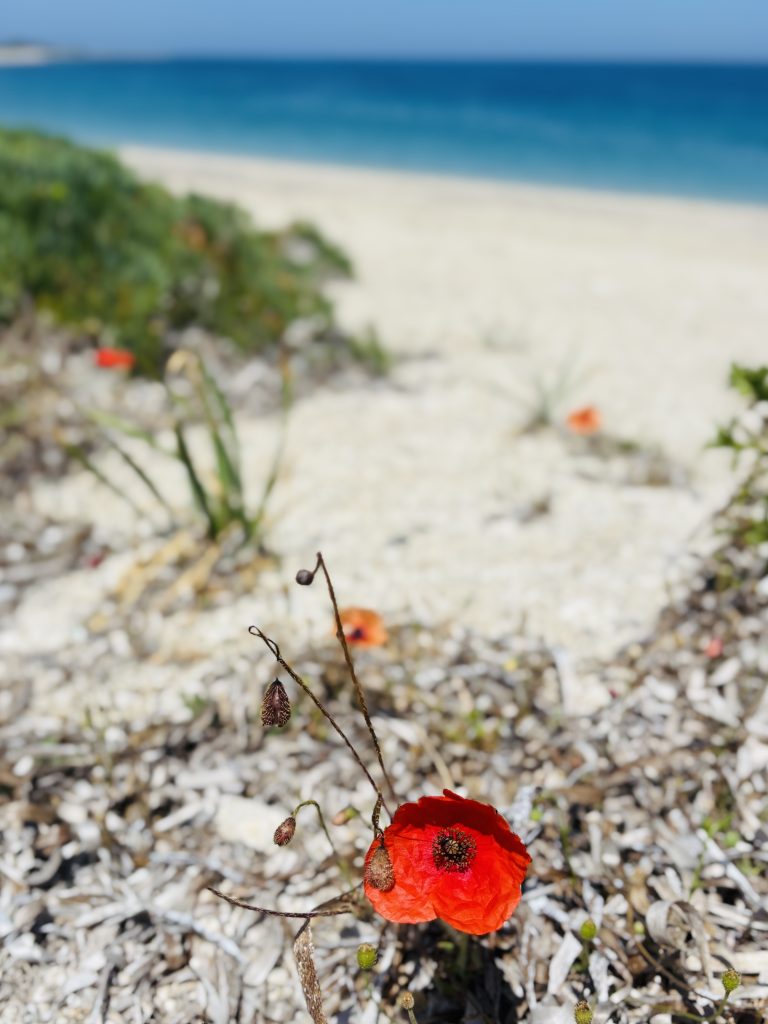
A Note on Witnessing Without Rescue
There are moments
that arrive like mirrors,
reflecting your past self
with such clarity
they halt the breath.
You stood in the half-light
of spring,
phone to your ear,
listening to her voice—
a voice that once was yours.
Trembling hope.
Circular reasoning.
The ache mistaken
for care.
Two winters ago,
you whispered the same justifications,
built scaffolds of explanation
for why you had to stay.
You remember the litany—
prayers to a god
that never answered.
Her words
fell between you like leaves.
You wanted to gather them,
reshape them,
return them
as wisdom.
Your hands ached
to offer rescue.
Instead,
you let silence rise.
You traced the rim of your mug.
Felt its warmth—
the heat that comes
from standing
in your own truth.
You remembered the day
you chose that heat
over the cold familiarity
of harm.
‘I’m here,’ you said,
‘but not where you are.
I’m waiting at the shore
you may reach in time.’
The space widened,
then narrowed.
Weeks passed.
Seasons turned.
When the message came—
not triumph,
but doubt—
you recognised it:
the first step
on a road
only her feet
can walk.
You saw it for what it was.
You named it.
You acted.
That took more than resolve.
It took vision.
A severing of illusion.
A return to yourself.
You reclaimed agency—and with it, a steadiness that holds you now.
And still—
you watch someone you love retrace the same loops you once escaped.
You recognise the signs:
the waiting,
the hope staked on harm,
the loyalty misread as patience.
You’ve lived it.
You know the cost.
That’s why it hurts.
Your empathy runs deep—
but it doesn’t drown you anymore.
You are not collapsing into her story.
You’re holding your own shape, even as you ache for hers.
This grief has strata:
grief for her pain,
grief for your distance,
grief for the wisdom you cannot hand over, no matter how you try.
This isn’t codependence.
You are not asking her to change so you can stay whole.
You are whole.
Still, you long to stay near—
to witness without wading in,
to care without surrendering clarity.
You need words that stand guard.
Not a wall.
A threshold.
When she turns to you—asking, not acting—
you need a truth that neither wounds nor invites collapse:
‘I see how hard this is for you. I remember how hard it was for me.
I want things to be different for you—
but I can’t make the choice for you.
I’m here if you want support.
But I won’t keep walking the same wound with you.’
This isn’t abandonment.
It’s devotion, tempered.
You stay close—
not by stepping into her dark,
but by lighting your own way
and trusting she will find hers,
when she is ready to see it.